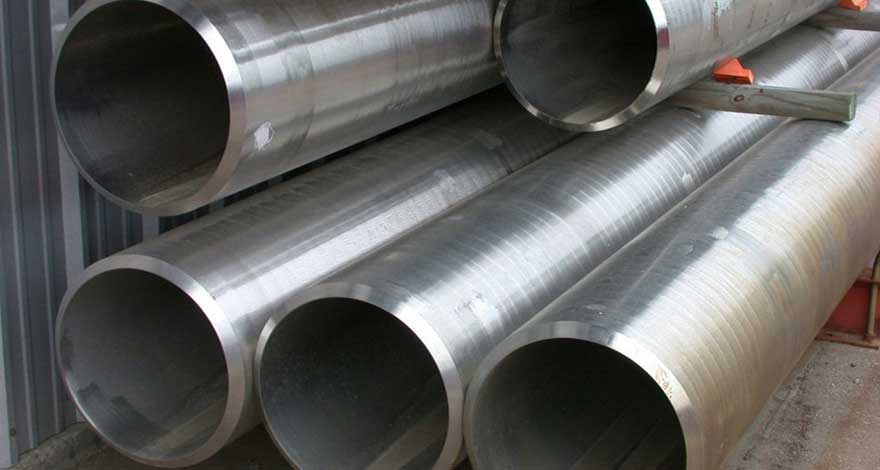
Seamless stainless steel pipes are produced by extrusion or rotary piercing methods, resulting in smooth, continuous pipes without any welded seams. These pipes are highly resistant to corrosion, heat, and mechanical stress, making them ideal for various industrial applications such as in the chemical, pharmaceutical, food processing, and automotive industries. Their superior strength, durability, and versatility have made them essential in critical applications where high performance is required.
| Type | Grades | Applications | Common Sizes |
|---|---|---|---|
| Austenitic | 304, 316, 321 | Food processing, chemical processing, HVAC systems | 1/8" to 12" |
| Ferritic | 409, 430 | Automotive exhaust systems, boilers | 1/4" to 8" |
| Martensitic | 410, 420 | Oil & gas, valve bodies, shafts | 1/4" to 6" |
| Duplex | 2205, 2507 | Offshore & marine, power plants, desalination | 1/4" to 12" |
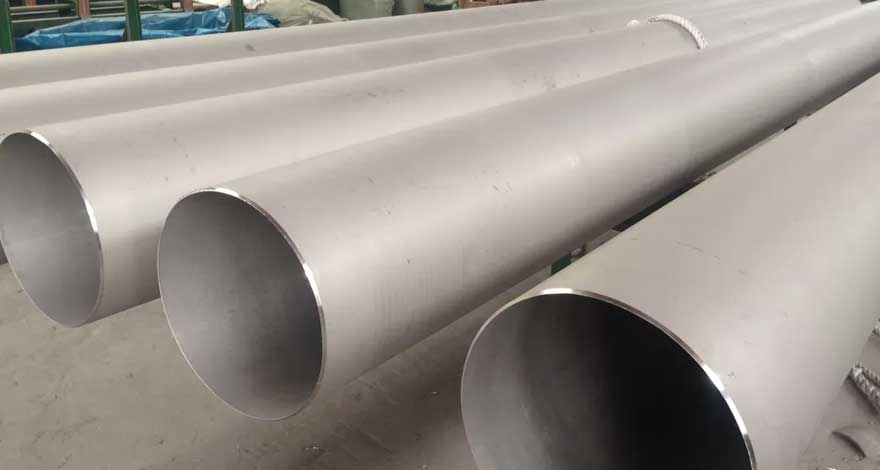
Welded stainless steel pipes are formed by welding flat strips of stainless steel into a cylindrical shape, making them a cost-effective alternative to seamless pipes. They offer good corrosion resistance and are commonly used in industries like construction, water treatment, and HVAC. Welded pipes are available in various grades and sizes, suitable for low to medium-pressure applications, and are known for their uniform wall thickness and smooth surface finish.
| Type | Grades | Applications | Common Sizes |
|---|---|---|---|
| Austenitic | 304, 316, 321 | Construction, HVAC, water treatment | 1/4" to 12" |
| Ferritic | 409, 430 | Automotive exhaust systems, water pipes | 1/2" to 10" |
| Martensitic | 410, 420 | Valves, pumps, industrial equipment | 1/4" to 6" |
| Duplex | 2205, 2507 | Marine, petrochemical, offshore platforms | 1/4" to 8" |
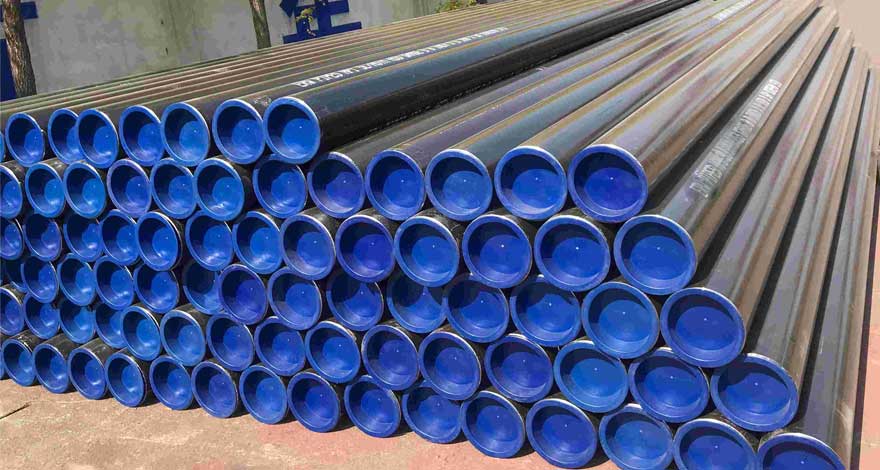
ERW (Electric Resistance Welded) pipes are made by rolling metal and welding it longitudinally using high-frequency electric resistance. These pipes are widely used due to their smooth finish, high dimensional accuracy, and cost-effectiveness. ERW pipes are commonly used in water supply systems, scaffolding, fencing, and structural applications. They are suitable for low to medium-pressure applications and are available in a range of sizes and grades.
| Type | Grades | Applications | Common Sizes |
|---|---|---|---|
| Carbon Steel | ASTM A53, A500, API 5L | Water supply, scaffolding, structural works | 1/2" to 24" |
| Stainless Steel | 304, 316 | Furniture, railings, architectural structures | 1/2" to 12" |
| Galvanized | ASTM A123, A500 | Fencing, piping in corrosive environments | 1/2" to 8" |
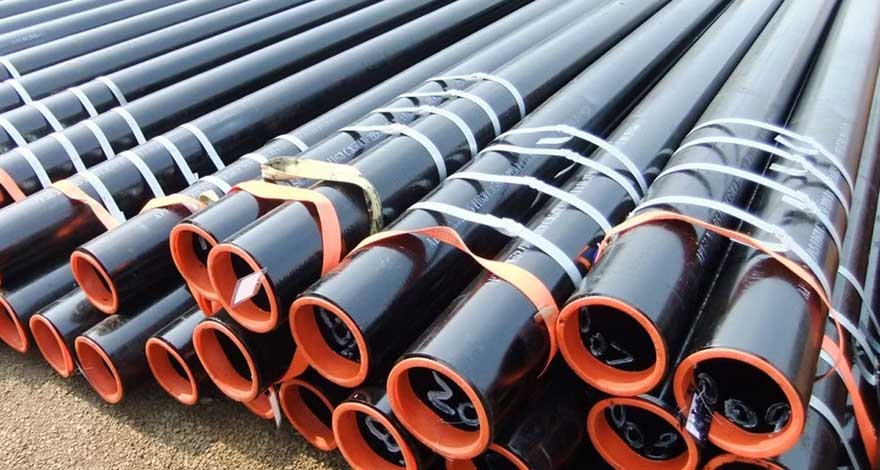
EFW pipes are strong and corrosion-resistant, ideal for high-pressure applications in oil & gas, petrochemical, and power industries.
| Type | Grades | Applications | Common Sizes |
|---|---|---|---|
| Stainless Steel | 304H, 316H, 321H | Power plants, refineries, boilers | 6" to 48" |
| Carbon Steel | ASTM A671, A672 | Oil & gas pipelines, high-pressure vessels | 6" to 60" |
| Alloy Steel | ASTM A335 | High-temperature services, chemical plants | 6" to 36" |
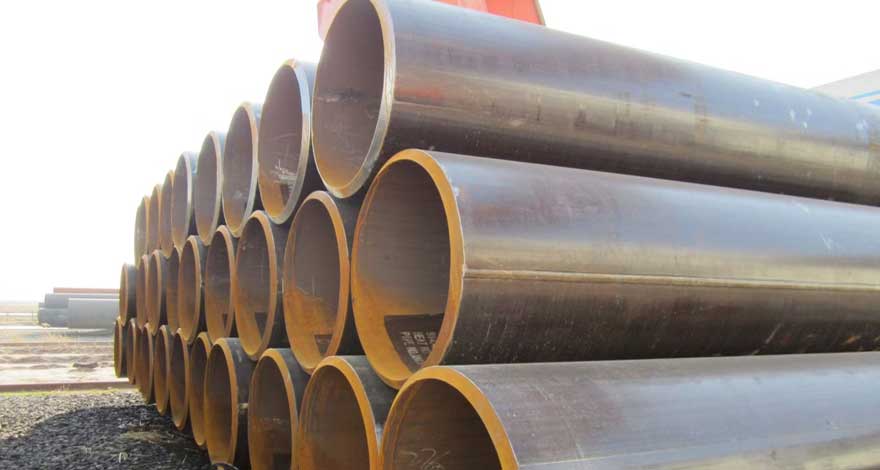
LSAW (Longitudinal Submerged Arc Welded) pipes are manufactured by bending and welding steel plates along the longitudinal axis. These pipes are known for their high strength, thick walls, and excellent weld quality, making them suitable for high-pressure and high-temperature applications. LSAW pipes are widely used in oil and gas transmission, offshore structures, and large-diameter pipelines. They are ideal for long-distance pipelines due to their reliability, straight seam, and superior mechanical properties.
| Type | Grades | Applications | Common Sizes |
|---|---|---|---|
| Carbon Steel | API 5L Gr. B, X42–X80 | Oil & gas pipelines, structural uses | 16" to 60" |
| Stainless Steel | 304, 316 | Offshore and marine structures | 18" to 48" |
| Alloy Steel | A335, A691 | High-pressure & high-temperature pipelines | 20" to 60" |
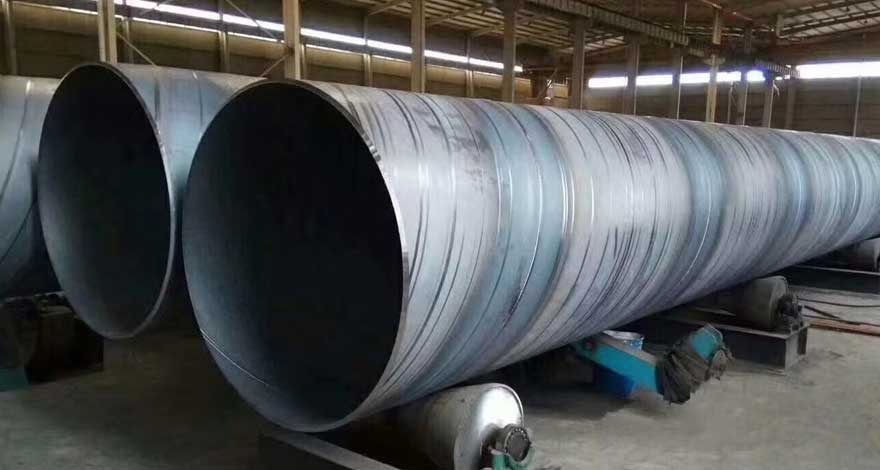
Spiral welded pipes are manufactured by spirally forming and welding steel coils, creating a helical seam along the length of the pipe. This method allows for the production of large-diameter pipes at a lower cost compared to other welding techniques. Spiral welded pipes offer good strength, flexibility, and are commonly used for water transmission, structural supports, and oil & gas pipelines. They are especially favored for long-distance and large-scale infrastructure projects due to their ability to handle high pressure and large volumes.
| Type | Grades | Applications | Common Sizes |
|---|---|---|---|
| Carbon Steel | API 5L Gr. B, X42–X70 | Oil & gas pipelines, water transmission | 20" to 120" |
| Galvanized | ASTM A53, A252 | Drainage systems, piling, structural supports | 24" to 80" |
| SSAW (Spiral Submerged Arc Welded) | API 5L X42–X80 | Cross-country pipelines, marine piling | 18" to 100" |
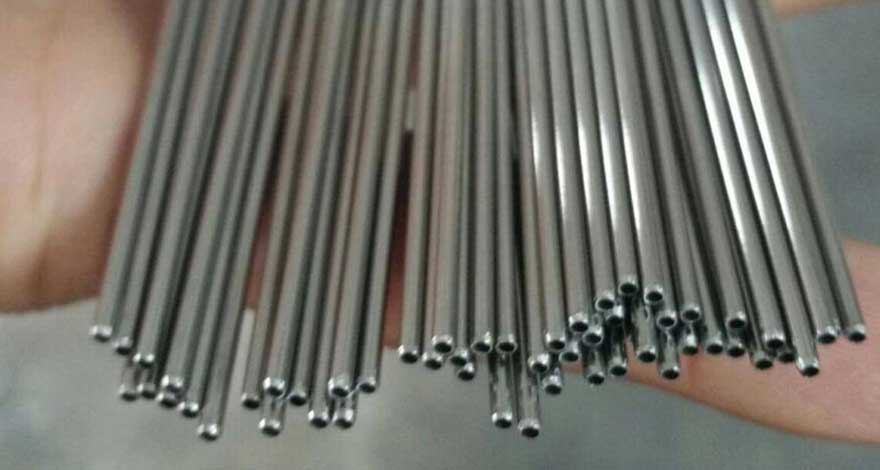
Capillary stainless steel tubes are extremely small-diameter tubes with tight tolerances, used for precision fluid and gas transfer. These tubes are known for their excellent corrosion resistance, smooth inner surfaces, and high strength. Capillary tubes are commonly used in medical instruments, chromatography, sensors, and instrumentation systems. Their ability to carry small volumes with high precision makes them essential for industries requiring accuracy and reliability.
| Type | Grades | Applications | Common Sizes (OD) |
|---|---|---|---|
| Austenitic | 304, 316, 316L | Medical instruments, lab equipment, sensors | 0.2 mm to 6 mm |
| Duplex | 2205 | High-pressure instrumentation, offshore systems | 0.5 mm to 4 mm |
| Nickel Alloy | Inconel 600, 625 | Chemical processing, nuclear systems | 0.3 mm to 3 mm |
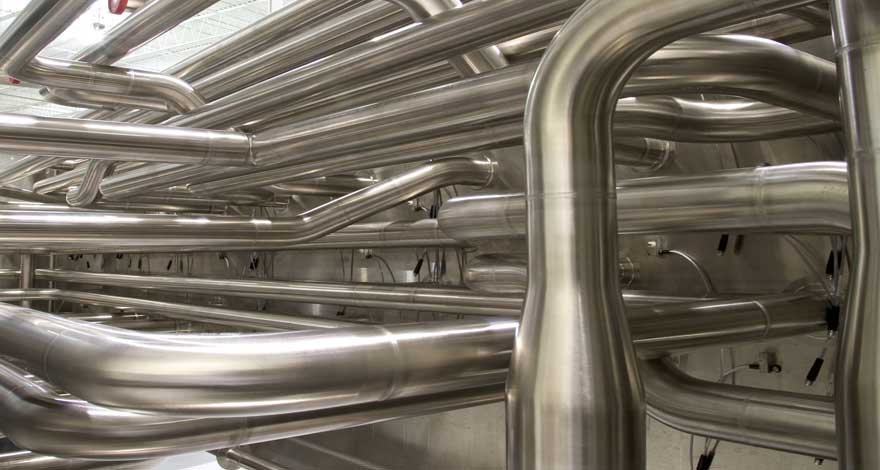
Hygienic (or sanitary) stainless steel tubes are specifically designed for applications requiring high levels of cleanliness and corrosion resistance. These tubes feature ultra-smooth internal surfaces to prevent bacterial growth and contamination, making them ideal for the food, beverage, dairy, pharmaceutical, and biotech industries. They are manufactured to meet strict sanitary standards like ASTM A270 and 3A. These tubes are easy to clean, compatible with CIP (Clean-in-Place) systems, and ensure the safe transfer of sensitive fluids.
| Type | Grades | Applications | Common Sizes (OD) |
|---|---|---|---|
| Austenitic | 304, 304L, 316, 316L | Dairy, food processing, pharmaceuticals | 1/2" to 6" |
| Electropolished | 316L (ASTM A270) | Biotech, lab systems, sterile environments | 1/2" to 4" |
| High-Purity | 316L | Semiconductor, ultra-pure water systems | 1/4" to 2" |
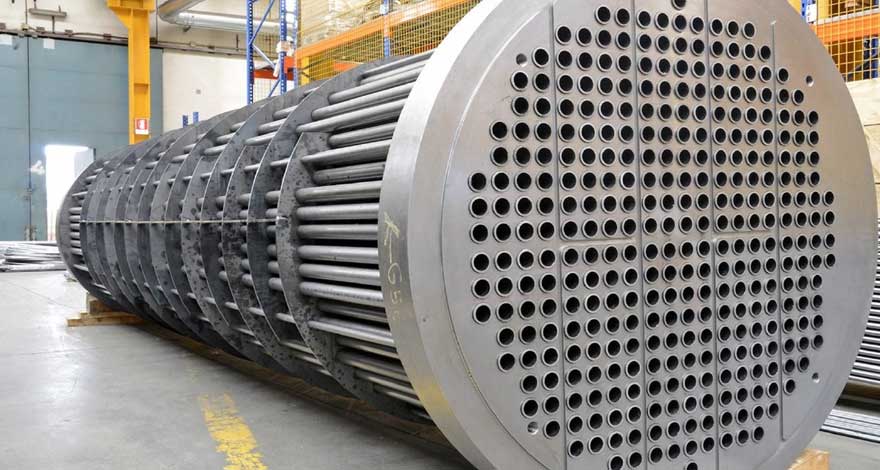
Heat exchanger tubes are specialized stainless steel or alloy tubes used to transfer heat efficiently between two fluids in heat exchange systems. These tubes are designed for excellent thermal conductivity, corrosion resistance, and durability under high pressure and temperature. Commonly used in industries like power generation, oil & gas, HVAC, chemical processing, and marine applications, they are critical for boilers, condensers, and refrigeration systems. Heat exchanger tubes are available in various configurations such as straight, U-bent, or finned to suit different system designs.
| Type | Grades | Applications | Common Sizes (OD) |
|---|---|---|---|
| Stainless Steel | 304, 304L, 316, 316L | Heat exchangers, condensers, chillers | 6 mm to 38 mm |
| Duplex / Super Duplex | 2205, 2507 | Oil & gas, marine, offshore heat systems | 12.7 mm to 25.4 mm |
| Nickel Alloy | Inconel 625, Hastelloy C276 | High-temperature chemical processing | 10 mm to 25 mm |
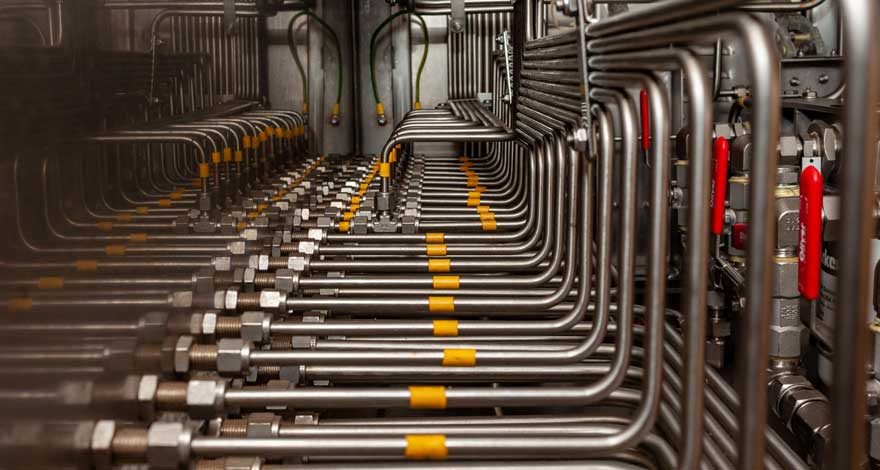
Instrumentation tubes are precision-engineered stainless steel tubes used for the safe and accurate transmission of fluids and gases in measurement and control systems. These tubes are designed with tight tolerances, excellent surface finish, and high corrosion resistance to ensure leak-free and reliable performance in critical applications. Commonly used in oil & gas, petrochemical, power plants, and pharmaceutical industries, instrumentation tubes are compatible with compression fittings and are ideal for high-pressure and high-purity systems.
| Type | Grades | Applications | Common Sizes (OD) |
|---|---|---|---|
| Seamless Stainless Steel | 316, 316L, 304, 304L | Control systems, instrumentation panels | 1/8" to 1" |
| Duplex Steel | 2205 | Offshore rigs, chemical processing units | 6 mm to 25 mm |
| Nickel Alloy | Inconel 625, Monel 400 | High-corrosion and high-pressure systems | 6 mm to 12 mm |